|
$$PLAIN_TEXT_PREVIEW$$
2020 Chapter Newsletter: Quarter 3
|
|
NMASLA — October 07, 2020
|
LETTER FROM THE PRESIDENT
|
|
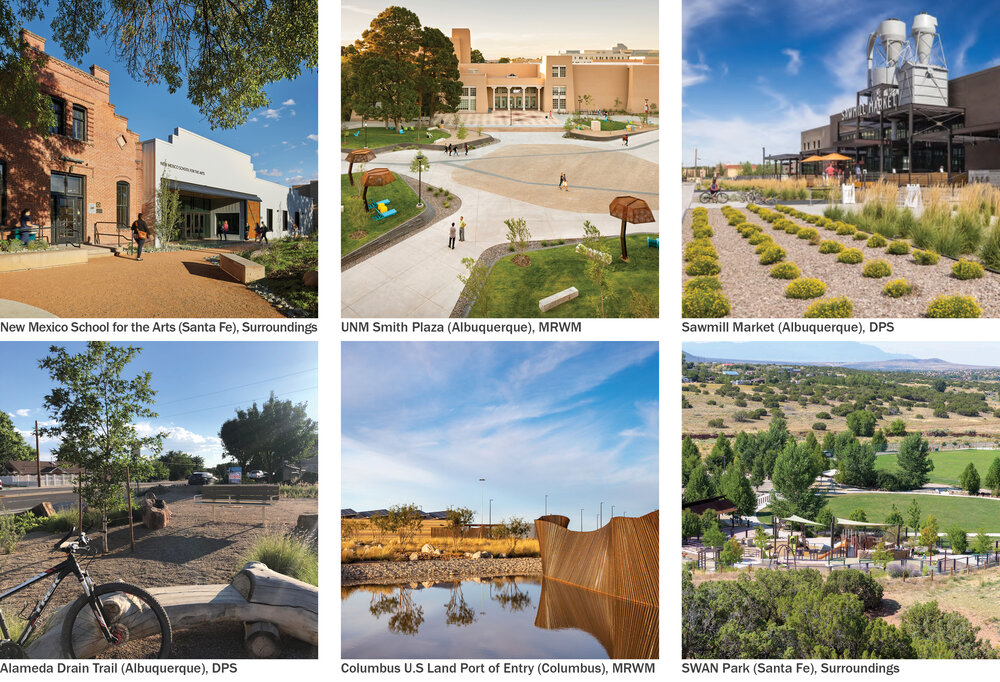
Dear NMASLA members, It has been quite a unique summer, and hope that each of you have found ways to explore new places, enjoy some respite, relaxation, and time with friends and family within the challenging constraints of living in the middle of a pandemic. Even though our first three quarterly events had to be canceled due to this situation, our Executive Committee has continued to meet monthly to assess the state of ASLA, the landscape architecture profession and its impacts from COVID, and to remain optimistic, and plan future events for our members. One such discussion has yield a creative response to our Q4 event. Since we cannot gather with you all, we are planning to bring some recent New Mexico based projects to all of you via short documentary style videos. And what is more exciting, is that the UNM Student ASLA members are going to be participating and making the films. This will give them an opportunity to meet with professionals (outside, masked, socially distant!) and tour project sites together to learn how the projects evolved from idea to reality. Some of the potential projects that may be profiled are shown at the end of this newsletter. Our plan is to release the films to our members in our Quarter 4 Newsletter, so stay tuned. In other great news for our NM chapter, two local firms received national recognition through articles in Landscape Architecture Magazine over the summer, which are highlighted below. Thank you for your support of NMASLA, as always, and please feel to write me anytime. I enjoy hearing from our members! Kenneth Francis, NMASLA President
|
YOUR NEW 2021 EXECUTIVE COMMITTEE!New officers will start their term on November 18th
|
|
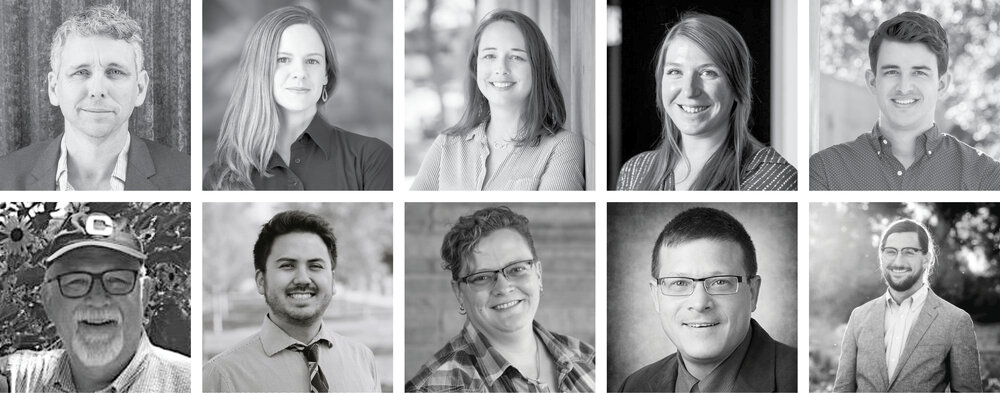
President: Kenneth Francis President-Elect: Courtney McKelvey Trustee: Jitka Dekojova Treasurer: Bonnie Strange Secretary: Brian Griffith At-Large Members: Richard Bumstead Kevin Amagai Ashlie Maxwell Ken Romig Ted Weber
|
PROJECT SPOTLIGHTALAMEDA DRAIN TRAIL, ALBUQUERQUE NM
|
|
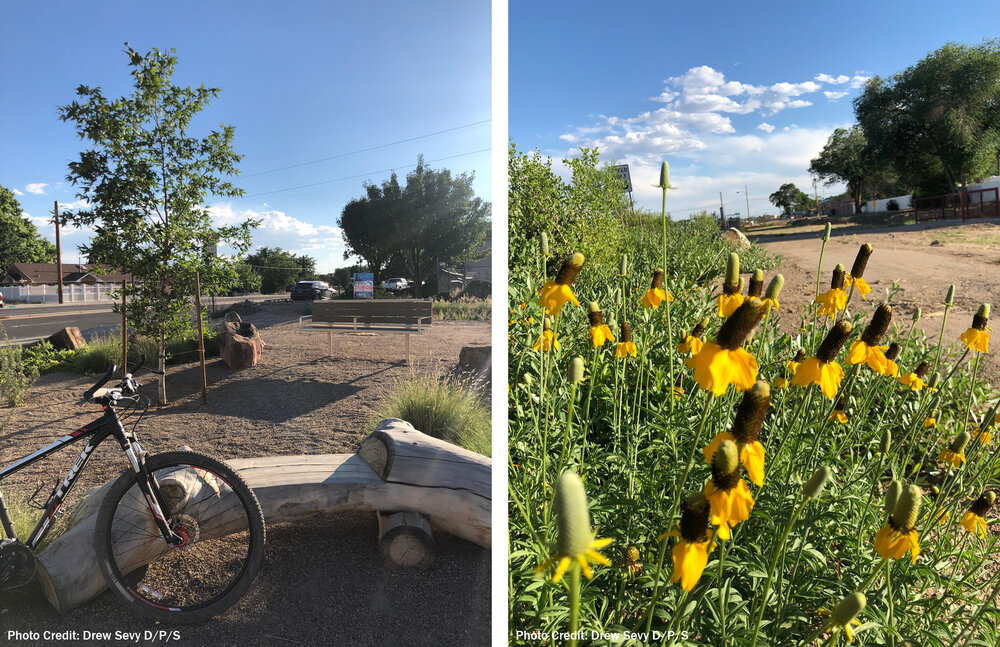
The Alameda Drain Trail is a nine mile multi-use corridor from Downtown Albuquerque to the outskirts of the city. As a consultant to Parametrix Engineering Dekker/Perich/Sabatini transformed the drain right of way into a regional transportation and recreation asset. A collaborative effort between four public agencies, Bernalillo County, Middle Rio Grande Conservancy District, Albuquerque Metropolitan Flood Control Authority and the City of Albuquerque, this project brings a multi-use path, landscape and water quality features to an utilitarian drainage conveyance system and incorporates green stormwater infrastructure to partially comply with MS4 permitting requirements. The first phase of design and construction involved a mile between Montano Road and Osuna Boulevard. The Drain was a barren right-of-way and drain designed to reduce high water tables from nearby agricultural fields and take waste water from irrigation ditches and has evolved over time to collect stormwater runoff from adjacent roadways. The four public agencies cooperated with project stakeholders, adjacent landowners and the public to transform the Drain into a public asset. A multi-use trail was constructed along the ditch and trees were planted within the right-of-way. Green infrastructure addressed water quality issues and enhanced the trail experience with spots of shade along the trail. A special seed mix was developed for the project and grass meadows were established to outcompete invasive plants. Native vegetation and edible plantings are planted to provide habitat and urban gardening opportunities. Go by the site today and pick wolfberries and currants for your summer jelly making. The Chadar water feature is the highlight of the mile of improved Drain. Chadar’s are textured water ramps of eastern origin. The Alameda Drain chadar creates white noise to mask the sounds of Second Street to enhance the trail experience. An irrigation wasteway that once ingloriously dumped water in the drain was transformed into a chadar and so is active only during the irrigation season. In late summer you may see many crawdads using the chadar as a climbing ladder and many a raccoon footprint. Green Infrastructure (GI) or Low Impact Development (LID) features were installed along the project corridor to help meet Agency MS4 permitting goals, including improving water quality and reducing Middle Rio Grande Conservancy District (MRGCD) maintenance needs. LID techniques such as bioretention swales, tree well infiltration structures, log check dams, and chadar water features improve water quality by trapping and removing silts and pollutants - inorganic contaminants and metallic compounds such as lead, organic chemicals like pesticides, and pathogens from stormwater runoff. Additional benefits include the infiltration of stormwater into the soil to support food-bearing and habitat-creating plants. LID techniques filter stormwater of floatable pollutants and address water quality issues by subjecting stormwater to sunlight and soil.
|
NMASLA MEMBER ANNIVERSARIESThomas Gay is celebrating his 30TH YEAR! Thank you Thomas. Craig Solether is in his 25TH YEAR! John Pope is celebrating his 20TH YEAR! Roxanne Carpenter is celebrating her 10TH YEAR! Tess Houle and Travis Tabet are celebrating their 5TH YEAR! Thank you all for your support of NMASLA.
|
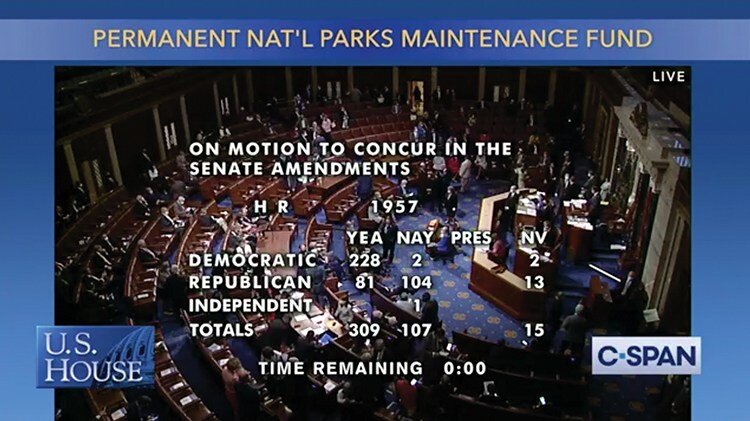
A LANDMARK LAW FOR PUBLIC LANDS AND PARKSBy Lisa Owens Viani, Landscape Architecture Magazine On July 22, the U.S. House of Representatives passed the Great American Outdoors Act, a milestone law to lock in permanent federal funding for public lands and parks. President Trump signed the measure August 4, having been persuaded several months ago to support it by Republican Senator Cory Gardner of Colorado, who is up for re-election this year. On the day the House passed the Senate’s version of the bill, approved in June, by a vote of 310 to 107, the president said on Twitter: “We must protect our National Parks for our children and grandchildren. I am calling on the House to pass the GREAT AMERICAN OUTDOORS ACT today. Thanks @SenCoryGardner and @SteveDaines for all your work on this HISTORIC BILL!”
|
REGISTER NOW FOR THE APA VIRTUAL CROSS CHAPTER COLLABORATIVEThe events of the last several months have introduced a new world for the urban planning profession. We have seen:
- the convergence of public health and public space;
- the introduction and mainstreaming of new technologies;
- an awakening to equity and inclusion and that our history continues to shape our present;
- a realization that approaches to planning and business have and are continuing to change radically;
- a recognition that resiliency means so much more than natural disasters, and
- a growing public awareness of the interrelatedness of everything.
With every challenge comes an opportunity to rise up. This demands a new approach - this demands collaboration. The American Planning Association Chapters of Arkansas, Kansas, Louisiana, New Mexico, Oklahoma, and Texas are proud to come together for a first ever, Virtual Cross-Chapter Collaborative #APAC3! With 4,080 members across six Chapters, 80+ sessions, and 65+CM credits over 5 days, #APAC3 will be THE continuing education and networking event of the year. Join the conversation about current issues, trends, challenges, and solutions that are shaping planning today. Key workshops like AICP prep, training for elected and appointed officials, and law/ethic sessions have been scheduled and there will be social opportunities to grow your professional network. Sessions will be recorded and available to all registrants, so you won't miss a thing. Register today and save with early-bird pricing!
Early Registration - August 25-September 18
APA Members - $100
Non-APA Members - $150
APA Members - Students - $25
Regular Registration - September 19-October 9
APA Members - $150
Non-APA Members - $200
APA Members - Students - $25
|
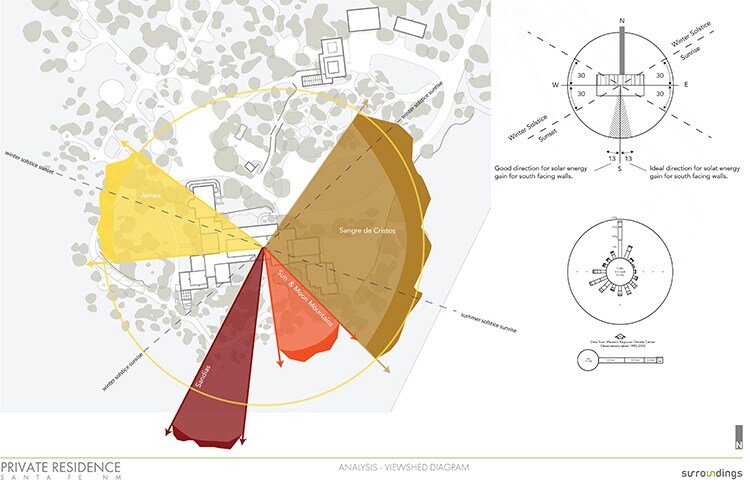
DISTANCE EARNINGBy Zach Mortice, Landscape Architecture Magazine LANDSCAPE ARCHITECTURE INTERNS ARE LEARNING THE ROPES OF THE PROFESSION THROUGH THE CABLES AND WIRES OF REMOTE WORK. Last fall, Lily Dendy, Student ASLA, an MLA student at Auburn University, was looking for internships in New Mexico. She was searching for firms that had used indigenous design strategies (such as acequia water catchment systems) on their projects, and she had also visited Santa Fe during a road trip from Alabama to New Mexico the previous year and was transfixed by the region’s natural beauty. She was amazed by the Earth’s ability to create life in the arid expanses, and by the sunsets: the most beautiful she’d ever seen. So Surroundings Studio, a small firm in Santa Fe, founded by partners Kenneth Francis, ASLA, and Sandra Donner, Affiliate ASLA, seemed like a perfect fit. She applied in January, and the partners liked her portfolio and began discussions to bring her aboard for the summer. But then the COVID-19 pandemic halted everything. She would not be going to New Mexico, the “Land of Enchantment,” Dendy says. “I was a little bummed.”
|
|
November 16th - 18th, 2020 When a landscape architect faces a change in conditions for their project, they have to revise the plans – just as we've had to do with the conference when faced with the COVID-19 crisis. reVISION ASLA 2020 is a reimagined, virtual experience for an evolving profession where you will get the opportunity to learn, connect, and celebrate landscape architecture – all from the safety of your own home. Let’s make 2020 a year to remember for all the right reasons—join us at reVISION ASLA 2020, and make your mark on the future of our profession. Up to 25 hours of professional development will be available Creative learning environments to reduce the number of times you check your email Opportunity to learn from corporate partners about brand new products and technology Opportunity to network and share best practices with peers Celebrate the profession of landscape architecture
|
|
QUARTER 4 VIRTUAL PROJECT TOURS For Q4, we are creating 5-7 minute documentary style videos of projects by local landscape architects across the state, which will be developed together with UNM students. More information coming soon!
|
|
|
|
|